| |||



|
Troubleshooting Guide
Troubleshooting Guide > Speed Controller Does Not Work  Speed Controller Does Not Work
Determine that the key switch or power switch is in the on position.
If the scooters uses a fuse, look at the inside of the fuse to see if it is burned-out. The fuse may need to be removed from the scooter and held up to a source of light to determine if it is burned-out or not. For scooters that use a circuit breaker, push-on or flip the circuit breaker to see if it will reset.
Electric scooters with single speed throttles will sometimes need to be pushed forward in order to run. Stand on the scooter with one foot and push it forward with your other foot while fully engaging the throttle. Once the scooter reaches walking speed and the throttle is engaged the scooter should run until the throttle is released or the brake is used.
Remove the footplate or wiring cover and look for any burned or melted wires, wire connectors, or electrical components. Also look for loose, disconnected, or damaged wires or wire connectors. Pull and push on all of the individual wires and wire connectors to make sure they are not loose or disconnected. Get your nose close to the speed controller and motor and smell them. Any components that look burned or melted, or that smell like burned plastic are almost always defective and should be replaced. Motors that smell burned should be replaced to prevent damage to the speed controller.
Electric scooter speed controllers are too complex to easily test. Testing the other components that are connected to the speed controller and using the process of elimination is the best method to determine if the speed controller is working or not. If all of the other components that are connected to the speed controller test good then the speed controller has to be the problem.
(Tool Needed: Multimeter) Sometimes fuses burn-out in a place where you can't see it, and sometimes circuit breakers will mechanically reset but they are worn-out and still will not work. Checking the continuity of the fuse or circuit breaker with a multimeter is the best way to determine if they are working or not.
(Tool Needed: Jumper Wire) The brake lever switch informs the speed controller to turn the motor off when the brakes are applied. Most scooters have normally open brake switches, however, some scooters have normally closed brake switches. To test for a faulty normally open brake switch, disconnect the brake lever wire connector from the speed controller and then see if the scooter runs. If the scooter run when the brake lever switch is disconnected from the speed controller then the brake lever switch is a normally open type which is faulty. To test for a faulty normally closed brake lever switch, disconnect the brake lever wire connector from the speed controller and bridge the two terminals together in the controller's connector that the brake switch is unplugged from. If the scooter runs when the controller's brake switch connector terminals are bridged together then the brake switch is a normally closed type which is faulty.
(No Tools Needed) Test the key switch or power switch for proper mechanical operation by moving it from the off position to the on position several times. The switch should snap into both positions. If the switch feels loose, or if it does not have a positive snap-action feel to it when switched between the on and off position then it may be defective. (Tool Needed: Multimeter) Sometimes the key switch or power switch will feel good and have a positive snap-action feel to it when switched between the on and off positions but it will still be defective. Testing the continuity of the key switch or power switch with a multimeter is the best way to determine if it is working or not.
(No Tools Needed) If the battery charger is plugged into the wall, unplug it. Plug the battery charger into the battery charger port on the vehicle and look for an illuminated indicator light on the battery charger. If an indicator light on the battery charger illuminates then the wiring and wiring connectors going to the charger port are good and the charger port itself is good. Not all battery chargers have an indicator light that will illuminate when the charger is only plugged into the vehicle, so if the light does not illuminate then a secondary Voltage test with a multimeter should be performed as described below. (Tool Needed: Multimeter) If you have a multimeter the battery charger
port's Voltage can be tested. The Voltage level present at
the charging port should be the same as at the battery pack. If the charger port
has male terminals then great care needs to be taken to avoid short circuiting
the terminals to each other or to the charger port's housing if it is metal.
(Tool Needed: Multimeter) After testing the charger port and confirming that it has Voltage then the battery charger can be tested. If the charger port has no Voltage then that issue will need to be fixed before testing the battery charger. To test the battery charger to confirm that it is recharging the battery or battery pack, first test the Voltage of the battery or battery pack to confirm that it is below a 100% state of charge and that it needs to be recharged. We have a Battery State of Charge Chart to help with determining if the battery or battery pack needs to be recharged. Once it has been determined that the battery or battery pack needs to be recharged, plug the battery charger into the vehicle's charger port, and then plug the battery charger into the wall. Next test the Voltage of the battery pack with a digital multimeter to see if its Voltage is slowly climbing. The multimeter should be set to a DC Voltage range that allows reading the tenths or hundreds of a Volt of the battery or battery pack. If the battery or battery pack's Voltage slowly climbs to a higher number then that indicates that the battery charger is recharging the battery or battery pack. Continue to charge the battery or battery pack until the light on the charger indicates that it is fully charged, then test the battery or battery pack Voltage to see if it is at a 100% state of charge as specified in our Battery State of Charge Chart. If the charger is not charging the battery or battery pack up to a 100% state of charge then the charger is faulty.
Visit our Battery Pack Load Testing Guide.
(Tool Needed: Load Tester) If the scooter is not running, a load test can be performed on its batteries by removing the battery pack from the scooter and taking the individual batteries out. The individual batteries can then be tested with a automotive battery load tester. Most entry level automotive battery load testers place a 100 Amp load on the battery which is too high so an adjustable carbon pile battery load tester is required and should be adjusted to place a 30 Amp load on the batteries.
(Tool Needed: Multimeter) If you have a multimeter the battery packs Voltage can be tested to determine its condition. A good battery packs Voltage will be above its rated Voltage level even if it has been fully discharged and allows to sit a few minutes, or if it has been in storage. If a battery packs Voltage does not bounce back to above its rated Voltage level within a few minutes after being discharged that points towards a defective or worn-out battery pack. When a battery pack has been fully charged and its Voltage is below its rated Voltage level that also points towards a defective or worn-out battery pack. Good scooter battery packs will bounce back to above their rated Voltage level within a few minutes after the scooter has been driven.
(Tool Needed: Multimeter) Visit our Throttle Testing Guide page.
Look for any burned or melted wires or wire connectors on
the speed controller. If any wires are burned or melted then
the speed controller may be defective. Speed controllers are too complex to easily test. Using inspection and the process of elimination is the best way to determine if a speed controller is working or not. If all of the other components of the electrical system test good but the scooter does not operate that indicates a defective speed controller.
Look for any burned or melted wires or wire connectors attached to the motor. Burned or melted wires or wire connectors indicate overheating of the motor which may cause the plastic insulation to melt off the motors electromagnetic copper wire windings. If the insulation melts off the copper windings they will short circuit and cause the motor to not run or to run slowly. Short circuited motor windings can also burn-out the speed controller by giving it too much resistance which makes it work too hard and overheat.
If the speed controller is faulty visit the Speed Controller Replacement Help page.
|
 Make Sure The Power Switch Is On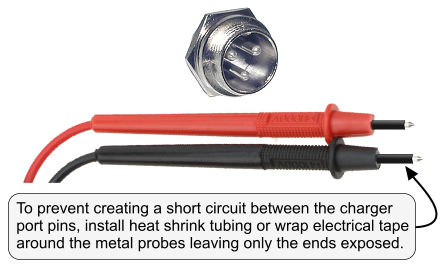
  |
 "When you need Electric Scooter Parts, go to: ElectricScooterParts.com"
Store Polices | Electric Scooter Repair Help | Dealer Discounts | Feedback | About Us
We Ship Internationally 


Copyright© 2002-2020 by ElectricScooterParts.com, an Electricruz Inc. company. All rights reserved.
|